DoNotEatUs.org
                           Help Us Help The Animals


Home
Catalog
Call to Action
Reports on Demos
Visitors Comments
Free  PDF Downloads
Contact Us
Privacy Policy
Gabriele Foundation
Universal Life
Universal Spirit


Have you seen our new Animal-Friendly Cookbook?


View the Cookbook


bruno logo

T  h  e  y   a  r  e   a  l  l   B  r  u  n  o  s  ! 
 

Help Us Help The Animals !


The Earth is mother for human beings, animals and nature. It bears countless fruits, which are offered not only to people, but also to the animal world. The animals are a part of mother Earth. They bear in themselves the awareness of their Creator, which is unity, and they want to be our friends.

The immeasurable suffering of animals today can be most effectively diminished wherever people stop eating meat. We invite you to help us help the animals.

As a non-profit organization that supports the rights of animals with billboards, posters, advertisements, postcards, books, videos and other means, we welcome all people who would like to help us help the animals. Select from any of the following assortment available to read online, preview or order to distribute.

Since 2004 we have been sending this material FREE OF CHARGE.  Unfortunately, contributions have not covered the cost.  Therefore, effective April 1, 2009, we are now requesting payment that exceeds the cost by a little to help us continue to support this effort in third-world countries.

Please visit our Catalog section.

We are now offering Free PDF Downloads of Posters and Postcards that you can download and print for distribution.
 

The animals thank you!


“Thanksgiving, Christmas & Easter:
A Celebration of Tradition or of Responsible Living?”

With holidays and traditional celebrations , many look forward to family gatherings and time spent with loved ones. Memories of favorite meals fill our senses. But only few stop to think of what it is like for the turkeys, pigs, cows and other animals during this time of feasting and celebration.

Never in all the history of mankind has so much suffering been caused to animals at our hands as is happening today in animal farming, where victims of the modern meat industry are pressed together in such close quarters that they attack each other in fear and aggression, where these living commodities are barbarically maltreated on animal transports, or where they die under unendingly torturous conditions in the slaughter houses. This horrible treatment happens in countries that claim ethics and morals as the basis upon which rest the fundamental rights of man and which guidelines are based on humanitarian principles.
 
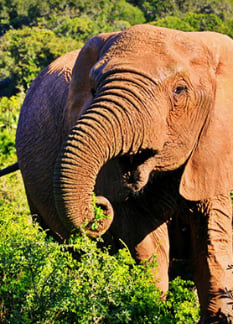
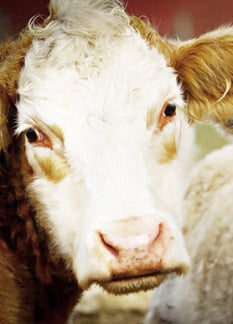
However, ever more alert and concerned people are joining in the fight for the rights of animals and a better world. One of their mottos is: “What Has Eyes, People Conscious of Their Responsibility Do Not Eat.” Keeping in mind that Thanksgiving, Christmas and Easter are holidays filled with family traditions, one could use this rather provocative campaign statement to question these traditions. After all, a very central part of these festivities is the feasting that takes place – where people often gorge themselves on wonderfully prepared, tasty morsels of stuffed turkey, succulent ham, lobster, crab, leg of lamb, just to mention a few of the favorites. And it is especially during the holiday season that there is a staggering rise in the numbers of animals led to the slaughter bench to satisfy the palates at these traditional feasts. Yet how many stop to think about what it means to the rest of the world, and most particularly to the living being that was slaughtered for this purpose? And, what does this have to do with responsible action?
 
In looking at tradition, many people feel good, safe and secure, and look forward to time spent with family and friends, as they have done many times before. But, in another viewpoint and looking more deeply into what tradition means, someone once said that tradition is actually the enemy of independent thought and action, because it invites a kind of mindless repetition of something that is taken for granted under the motto, “it’s always been this way.” And how many people don’t shrug their shoulders as they say this in answer to a question raised?
 
Perhaps it’s high time we take a closer look at our actions and place them into question. Given the title of the campaign slogan, “What has eyes, people conscious of their responsibility do not eat”, we may be led to think that this means that meat eaters are irresponsible. So what does it means to be a responsible person.
 
Individual responsibility means that I see to it that what I do is done as well as possible, that nothing and no one is harmed. It is clear that we also bear responsibility for the Earth and for the animals – they also belong to the Earth. Therefore, this means to see that no harm comes to these animals. Until we stop eating meat, we cannot exclude ourselves from the act that comes before eating the meat, and that is that we are basically giving the order to kill. This is not a responsible way of behaving from an ethical point of view – if we assume that animals are creatures of God, that they are our little brothers and sisters, that they, like us, bear the life in themselves. Because, after all, ultimately we did not give life to them, so what gives us the right to take their life?
 
When one meets an animal and looks them in the eyes, how could he bring himself to take a knife and kill this animal? There is a story about Tolstoy, whose aunt wanted chicken. He told her, “Okay, I will serve it, but you must kill it yourself,” and of course, the aunt did without the chicken. If we had to kill our steak beforehand, the number of vegetarians in the world would presumably rise far above what it is today. Isn’t it then irresponsible to say: “I pass this task of killing on to another” and then take the meat from the freezer? Am I not also responsible for what I push onto others to do for me? Being a responsible person also means facing up to my actions and what they bear as consequences for other living beings – whether people or animals.
 
Another important aspect of this responsibility we cannot afford to ignore are the effects of animal farming on the environment. As the energy resources become ever scarcer, one should ask: At whose costs and under which suffering is today’s food produced? On our planet Earth we have circa 3 times as many of these animals as people, and they need living space. According to a report, put together by the UN, two thirds of the world’s agricultural land is used for livestock farming. But on these pastures one could grow a lot of fruit, grain and vegetables, which would produce enough healthy food for everyone. On the other side, these animals take a lot of food away from many people already. Just think of the famine that takes place in Africa and other parts of the world. We need enormous amounts of grain, soy products and other fruits and vegetables to produce beef and other meat products. For example, one third of the world’s cereal harvest, 95% of US soy production and 73 % of corn grown – just to mention a couple – is fed to farm animals. It is not for nothing that there is a saying: “The rich man’s cow eats the poor man’s bread.” There would be enough; Mother Earth gives us enough to feed all people. So, purely on an ethical note – given that today every second a person dies of hunger – the consumption of meat cannot be justified.
 
Factory farm animals are also a major source of the greenhouse gases of methane and nitrous oxide, which are causing the warming of our climate, not to mention the ammonia from liquid manure that is a major contributor to acid rain and pollutes the groundwater. What most of us aren’t aware of is that factory farms are like small, tightly packed cities of animals that generate huge amounts of waste. For example, ten thousand hogs on a typical factory farm will generate the water volume equivalent to a city of 25,000 people. However there are no laws on the disposal of such animal waste and the common practice is to keep it in underground pits or open cesspools until it is spread on the land as fertilizer or dumped into local waterways. Water is necessary for life, yet this resource is getting ever scarcer and polluted in this way. According to the United Nations, more than 1.4 billion people in the world do not have access to safe drinking water, and yet, 86% of fresh water consumed worldwide is used for agriculture, and the amount required to produce 1 Kg of grain-fed beef is 100 times the amount required to produce 1 Kg of wheat. We know that we should economize more with energy, and that it is inefficient to take plant foods to produce animal protein and animal products. This devours enormous amounts of energy resources, enormous amounts of water.
 
There are many more instances that could be mentioned, but the bottom line in all this is that we cannot push the responsibility for the state of the world – with respect to the problems of hunger and the environment – just on to the politicians and the laws, because with his breakfast, lunch and supper, every person shares the responsibility for the conditions of our planet as a whole. Never was a statement more true today: What we can change in ourselves could also change the world. The American Indians already knew this when they said “We did not inherit the Earth from our ancestors, instead, we are renting it from our children.” This clearly defines our responsibility.
 
It is high time to focus on our traditions and habits and ask ourselves whether they are the result of responsible acts of conscience or the blind actions of the masses. Let us ponder this throughout the year to really give thanks for the gifts of life and of our beautiful planet Mother Earth. Let us consider the following: If we truly are thankful, doesn’t this mean that in our heart, in the deepest part of our being, that we also feel responsible to see that future generations also have a good basis for a responsible and meaningful life?

 Universal Life – The Inner Religion
 P.O. Box 3549, Woodbridge, CT 06525
1-800-846-2691


 The Prophetic Voice for the Animals 

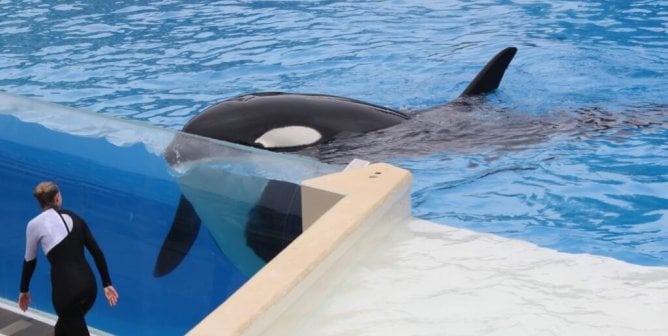
Animals suffer unspeakably in the slaughterhouses, in the experimental laboratories and through hunting - killed million fold for the human consumption of meat. The animals speak into the hearts of the people: "Help us, so that we have a roof over our heads just as you do. Feel into your hearts, you people! Feel that we are your little brothers and sisters! ... Please, please, help, so that animal loving people can build shelters for us and give us food!"

 Read more...


HomeCatalog | Call to ActionReports on DemosVisitors Comments | Free  PDF Downloads
Contact Us | 
Privacy PolicyGabriele Foundation | Universal Life | Universal Spirit

© Copyright  All rights reserved.

Universal Life

PO Box 3549

Woodbridge, CT 06525

Phone 1-800-846-2691 | E-mail info@universelles-leben.org | www.universal-life.cc